
A quarter century ago I wrote an epic poem entitled “The Life of Adam.” Although the only surviving copy now resides in the Library of Congress, it was my take on putting the purported “first people” in a pre-Saharan, Edenic grassland with flowing waterways as revealed by modern satellite imagery.
Unfortunately, my Adam and his people were hounded by an individual known as “The Man With The Tail.” This was Menes the Great, so-called founder of Ancient Egypt’s First Dynasty who according to legend wore a lion’s skin replete with tail.
One epic poem leading into another, I then wrote “Egyptian Elegies”, mostly on breaks while working as an extra in film and TV. As originally conceived, this was to include nine elegies, each covering either a legendary or fictional character over the 3,100 years or so from Menes to the last of the Ptolemies.
Reaching the end of the Ptolemaic line I ran into Cleopatra. She’d been so overdone I decided to look a few centuries ahead to see who else was out there. That’s how I encountered Hypatia of Alexandria. She was not unknown to me and you’d be right to say she’d been overdone, as well. The more I researched Hypatia, however, it became clear it was her legend that has been overplayed. All of this I documented in a paper delivered at the 2018 Hawaii International Conference on Arts & Humanities titled “The Case of Hypatia of Alexandria.” [See The Case of Hypatia in this web site.]
 2018
2018
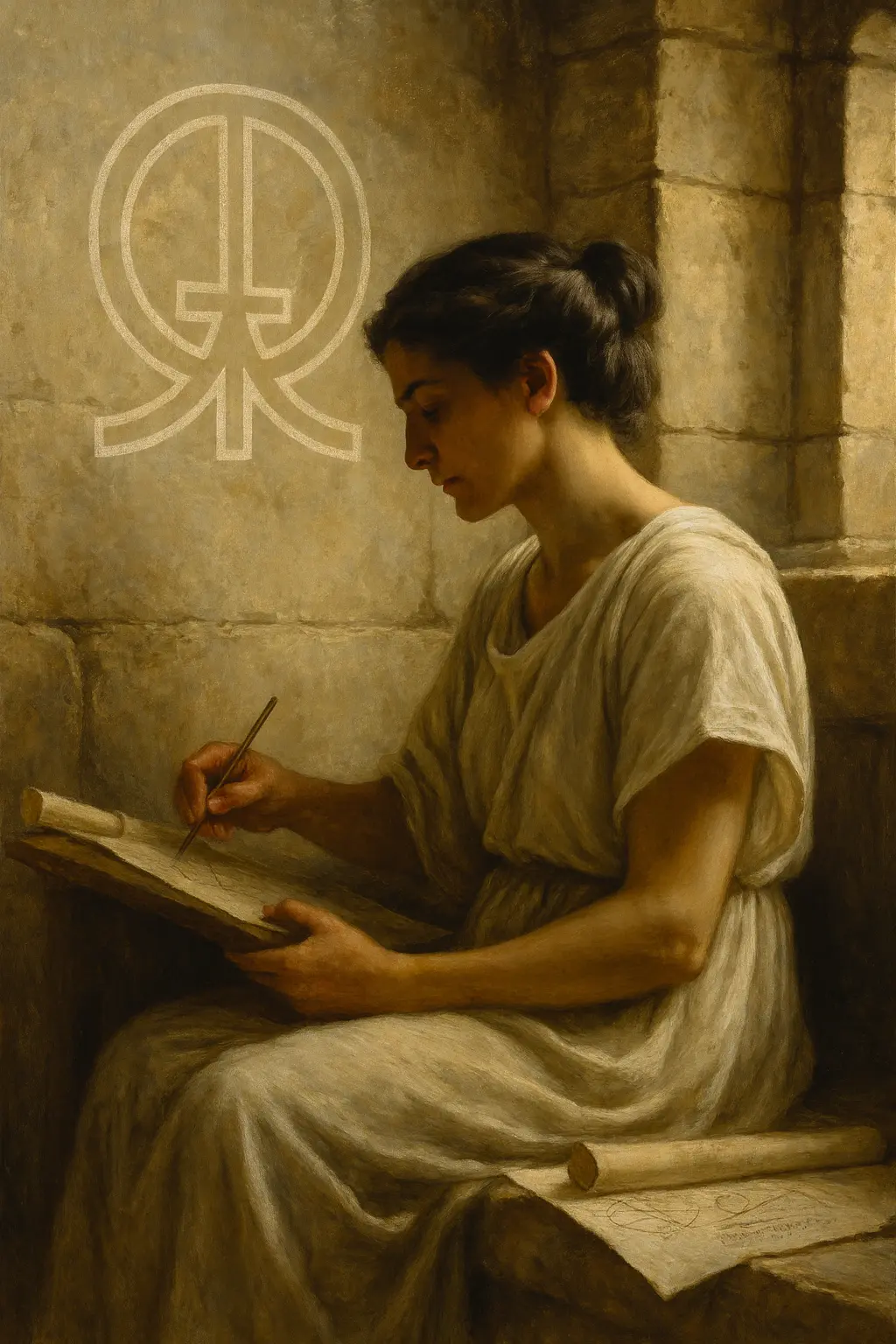
Concluding, as have many scholars before me, that the popular legend of Hypatia is without foundation, I decided her image was due for reformation in keeping with what little is both known and, given her times, likely.

Readers will find the world-building of the 4th century Alexandria well-researched, including background on the military, chariot racing, the burgeoning Church, the politics around these and much more. A key event, often overlooked by historians, is the Great Tsunami of July 21, 365 CE that wiped out much of Alexandria — very likely including its famous Library — and its impact upon daily life thereafter, not least of all Hypatia and her family.